Why Cybersecurity Is Becoming a Business Priority
Security moved from an IT problem to a board-level one because the losses are business losses. Read the economic mechanism and a defensible way to budget for it.
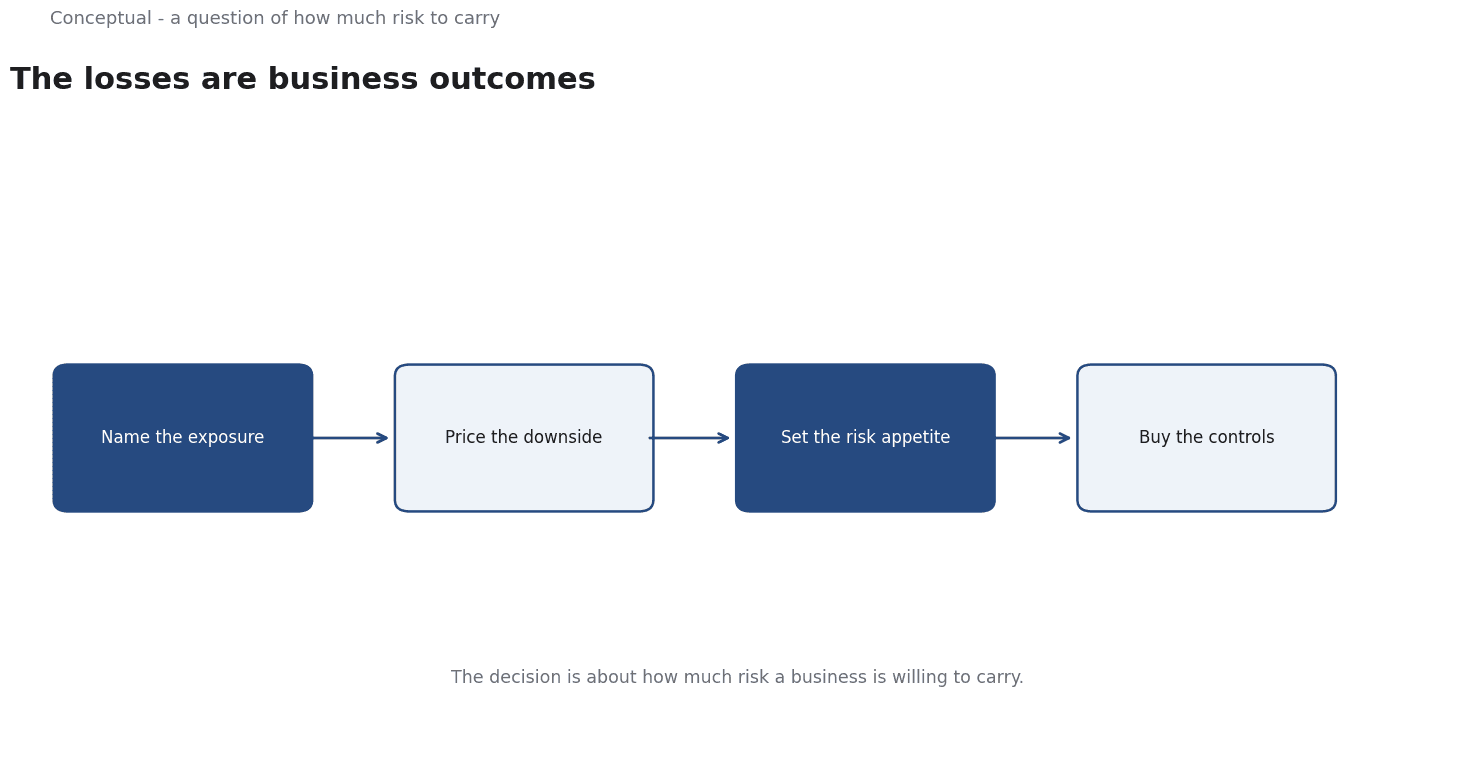
Security used to be a line item that engineering handled. The reason it has moved up the organisation is not that attackers became more creative — it is that the consequences of a breach now land directly on revenue, operations, and reputation. A framework that treats security as a technology purchase misses the point: the decision is about how much risk a business is willing to carry.
Direct answer:
Cybersecurity is a business priority because the losses it prevents are business outcomes — interrupted operations, lost customer trust, legal and contractual exposure — rather than technical inconveniences.
NIST SP 800-30 frames the underlying decision as a risk assessment over threats, vulnerabilities, likelihood, and impact, carried out at multiple tiers of an organisation. The practical implication is that security spending should be justified by the reduction in expected loss it buys, not by the number of tools deployed.
The unit of analysis is the firm
At the level of a single laptop, security looks like a configuration problem. At the level of a company, it is a question about which assets create value and which failures destroy it.
Three mechanisms explain the shift to the board agenda.
Operational dependence. Companies run on systems whose availability is a precondition for revenue. A ransomware incident is not an IT outage that happens to affect sales; it is a business interruption with an IT cause. The relevant metric is hours of lost operation, not patched servers.
Data as liability as well as asset. Customer and employee data creates obligations — contractual, regulatory, and reputational. A breach converts an asset into a liability overnight, and the cost is borne by the whole organisation, not the team that owned the database.
Third-party reach. A company's exposure now includes its suppliers and service providers. An incident at a vendor can propagate into the business, which means risk assessment has to extend beyond systems the company directly controls.
The OWASP Top 10 illustrates the application-level version of this. OWASP describes it as "the reference standard for the most critical web application security risks" and "a broad consensus about the most critical security risks to web applications" — evidence that the same small set of software failures recurs across organisations. A business that treats those failures as purely technical is ignoring how often they become the entry point for a business-level event.
Why the incentives are awkward
Security has a structural problem: success is invisible.
The budget that prevents an incident produces no visible result, while the incident that occurs despite spending produces an obvious loss. This creates two predictable failures.
Underinvestment in prevention. Because the benefit is a non-event, security competes badly against projects with visible returns. The counterargument is that risk reduction is still a return — it is simply a return measured in avoided loss.
Overinvestment after a scare. After an incident, organisations often buy tools in proportion to the fear rather than to the risk.
NIST SP 800-53, the "Security and Privacy Controls for Information Systems and Organizations", exists partly to discipline this: it provides a catalogue of controls so that a claim about protection can be checked against a defined list rather than a sales pitch. A catalogue is not a strategy, but it is a floor for the conversation.
A worked example of security budgeting
The following numbers are hypothetical and illustrative, not observed data. They show how to make the decision defensible.
Suppose an e-commerce business estimates that a serious outage or breach would cost 2 million in lost revenue, recovery, and customer remediation. Its security team proposes two investments:
| Control | Annual cost | Estimated reduction in annual probability |
|---|---|---|
| Backup and recovery rehearsal | 80,000 | from 10% to 6% |
| Application security testing | 120,000 | from 10% to 7% |
Expected annual loss without controls: 10% × 2,000,000 = 200,000.
With backup and recovery alone: 6% × 2,000,000 = 120,000. The reduction is 80,000 against a cost of 80,000 — break-even on the estimate.
With application testing alone: 7% × 2,000,000 = 140,000. The reduction is 60,000 against a cost of 120,000 — a poor buy.
With both, if the effects combine rather than simply add, the probability might fall to roughly 4%: 80,000 expected loss, a reduction of 120,000 for 200,000 in cost. On these numbers neither control pays for itself, and the honest conclusion is that the business should seek cheaper controls or accept the risk.
The point of the example is not the answer — the probabilities were invented — but the discipline. A security proposal that states its assumed probability, its impact, and its expected reduction can be evaluated. A proposal that says "this tool improves security" cannot. This is the risk-assessment logic SP 800-30 formalises, applied at the business tier.
What changes the conclusion
Three qualifications keep this framework honest.
The probabilities are the weak link. Historical incident rates are noisy, underreported, and poor guides to a changing threat environment. Treat them as assumptions to be tested, not facts to be multiplied.
Impact is not only financial. Regulatory, contractual, and reputational consequences can dominate the direct loss, and some are hard to price. A framework that monetises everything will underweight them; one that monetises nothing cannot prioritise.
Controls interact. As the worked example showed, combining controls is not the same as adding their effects, and redundant controls waste budget. ATT&CK helps here: MITRE describes it as a "globally-accessible knowledge base of adversary tactics and techniques based on real-world observations", useful for checking whether two controls interrupt the same path.
What a board should actually see
Security reporting fails in two opposite ways: a wall of technical detail, or a single green/red status. Neither supports a decision. Four measures are more useful because each connects a technical fact to a business question:
- Exposure by critical asset, not a count of vulnerabilities. The relevant question is which revenue-generating systems have a known, reachable weakness and who owns the fix.
- Detection and recovery time, measured from the start of an incident rather than from its discovery. This is the operational analogue of "how long would revenue stop?"
- Control coverage against a named threat model, using MITRE ATT&CK or SP 800-53 as the reference. A percentage means little without the list it is a percentage of.
- Residual risk accepted, with the owner and the review date. Some risks should be accepted; the board should see that decision explicitly rather than infer it from silence.
These measures also fix the incentive problem described earlier. They make prevention visible by reporting the reduction in exposure, rather than waiting for an incident to make the absence of prevention obvious.
A decision test for leaders
- Name the business assets whose loss would stop revenue or damage trust.
- Describe the plausible incident in operational terms — what stops working, for how long, for whom.
- State the assumptions about likelihood and impact, and who owns them.
- Require a control to name the path it interrupts, not merely the category it belongs to.
- Compare cost to expected reduction in loss, and accept that some risks should be accepted rather than mitigated.
- Map the control set to a recognised catalogue or threat model to find gaps and redundancies.
- Review after an incident or a material change in the business, not on a fixed annual ritual alone.
For the technical frameworks behind this, see Cybersecurity Fundamentals; for how governance disciplines turn technical risk into organisational decisions, see AI Governance.
References & Further Reading
- NIST, 2020. NIST SP 800-53: Security and Privacy Controls for Information Systems and Organizations — The control catalogue behind most compliance programmes.
- MITRE, 2026. MITRE ATT&CK — The adversary tactic and technique knowledge base used for detection engineering.
- OWASP Foundation, 2021. OWASP Foundation — The consensus web-application risk list.
- NIST, 2020. Zero Trust Architecture — The official zero-trust architecture and its tenets.